


A curl defining brush is a styling tool used to arrange prepared hair into curl groups. When choosing one, look at its intended use, how comfortably you can work with it, the available instructions, and whether its features fit your routine. A popular brush is only useful if you actually enjoy using it.
Another brush in the bathroom drawer? It had better have a job. If you’re wondering whether a curl defining brush belongs in your routine, let’s talk it through before you click “add to cart.” You don’t need to know every brush term. You just need a clear idea of what you want to make easier.
First, separate the jobs in your routine
Are you shopping because detangling feels difficult, because you want more deliberate styling, or because you want a tool that’s easier to handle? Those are different needs. A purchase is easier to evaluate when you can finish the sentence “I want this to help me…”
| Your task | What to look for |
|---|---|
| Removing knots | A suitable detangling method and a tool you can use gently. |
| Shaping prepared sections | A defining tool with clear styling instructions. |
| Detailing selected areas | Comfortable control and a method that suits your preferred section size. |
| Finishing the roots | A root-focused feature or separate tool that matches your finishing routine. |
The AAD’s curly-hair care advice emphasizes gentle detangling and sectioning. Keep that foundation in mind when comparing tools. You shouldn’t have to tolerate repeated snagging just because a brush is marketed for your texture.
What to compare before buying a curl defining brush
1. Instructions you can picture yourself following
Look for a demonstration that shows the starting condition of the hair, the movement of the tool, and the finished result. A polished final photo is nice, but the middle of the process is what helps you decide whether the method feels approachable.
Watch for the practical details: can you see the person’s hand position? Do you understand what happens at the ends? Can you identify what you would do if the tool caught? Clear teaching matters as much as an attractive product photo.

2. Comfortable handling
Think about the part of your current routine that frustrates you. Is it reaching the back? Keeping a secure grip? Working through lots of sections? These are useful shopping criteria. “Everyone has it” is much less helpful.
You may not be able to assess comfort fully online. Read available dimensions and handling information, then check the return conditions so you understand your options before buying.
3. Features you’ll actually use
An extra feature is valuable when it replaces a step or tool you already want. If it doesn’t fit your routine, it’s simply an extra feature. Make a short list of what matters to you rather than choosing the longest feature list.

4. Care and ongoing use
Find the cleaning instructions before the brush becomes another item you’re unsure how to maintain. Check what the manufacturer says about product buildup, storage, and any use restrictions. Follow those instructions rather than assuming every brush can be cleaned the same way.
5. Realistic expectations
Look for claims about styling that explain their limits. Be cautious about guarantees that one purchase will produce identical results for everyone. The useful comparison is between your current routine and a new approach—not between your hair and somebody else’s edited photo.

Where The Curl Trainer PRO fits
The Curl Trainer® PRO Curl Defining Brush is our option for styling wavy, curly, and coily hair. Its product information describes guiding grooves for gathering curl groups and a built-in pick for root finishing.
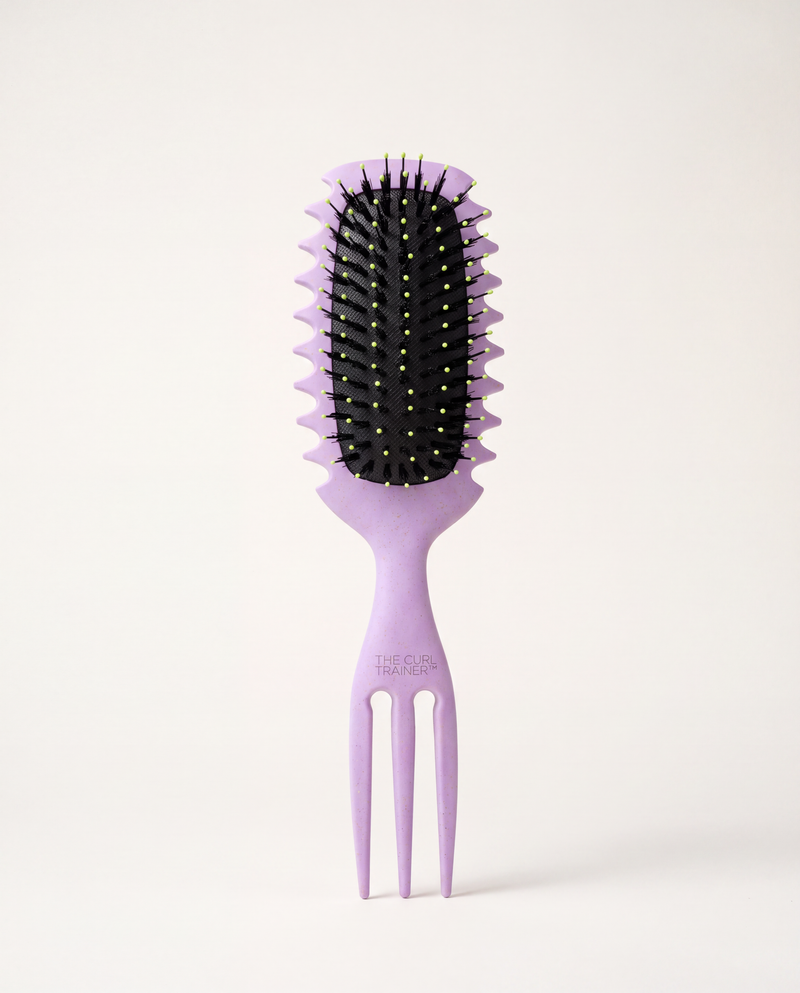
Because this is our brush, here’s the useful next step: review the features alongside our guide to how curl training works, then decide whether you want to use that method. You shouldn’t have to guess how a product fits into wash day.
The product page also explains that the brush doesn’t repair heat damage and that results depend on your hair and technique. That context matters more than a promise of one perfect outcome.
When you can keep what you already have
If your current tools feel comfortable and you love your results, there’s no requirement to replace them. If you’re curious, you can first practice a more deliberate routine with tools you already own, provided they’re suitable for that use.
If your main challenge is understanding technique, start with education. If your existing brush is uncomfortable or damaged, that’s a more concrete reason to evaluate alternatives. Give the purchase a purpose.
Before you check out
Read the current product details, confirm the care instructions, and review the linked return policy. Policies and offers can change, so use the live page rather than relying on an old screenshot.
Then ask yourself one last question: “Can I explain why I want this?” If the answer is “I want to try guided brush styling, and I understand how to start,” you’ve made a much more useful decision than buying a brush because it was everywhere this week.
A few questions you might be asking
Is a curl defining brush the same as a detangling tool?
The tasks differ. Defining is about arranging prepared hair; detangling is about removing knots. Some tools support both, but follow their instructions and do not force a styling pass through tangles.
How do I choose a curl defining brush for wavy hair?
Look for guidance that includes waves, consider how much shaping you want, and assess handling comfort. A texture label alone does not establish that you will prefer a particular tool.
Does the most expensive brush give the best results?
Price alone does not tell you whether a brush suits your preferences. Compare intended use, instructions, handling, care requirements, and return conditions.
Where can I learn to use The Curl Trainer PRO?
The linked Curl Training Guide provides the brand’s starting method. Review that demonstration and the current product instructions before using the brush.

